They Called it a ‘Lost Cause.’ What One American State Did to Secure its Elections Just Stunned the Nation
For years, the integrity of American elections has been a battleground. Accusations of foreign interference, systemic vulnerabilities, and a growing distrust in the democratic process have plagued the nation, creating deep divisions. While many states have dithered, paralyzed by political gridlock, one unexpected state—often dismissed as ‘flyover country’—decided enough was enough. They didn’t wait for federal mandates or endless debates. With a bold, bipartisan move, this state implemented the most secure election system in modern American history, a decision that has silenced global critics, infuriated partisan pundits, and delivered a powerful victory for every citizen who believes in the sacred trust of the ballot box.
The Unseen Threat to the Ballot Box
The silent erosion of trust in America’s elections was a national security crisis in plain sight. From outdated voting machines to fragmented voter registration databases, the vulnerabilities were well-documented but rarely addressed with decisive action. The perception of a compromised system, regardless of factual basis, fuelled division and threatened the very foundation of American self-governance. Foreign adversaries watched, ready to exploit any weakness, as citizens increasingly wondered if their vote truly mattered.
The ‘America First’ Election Security Act
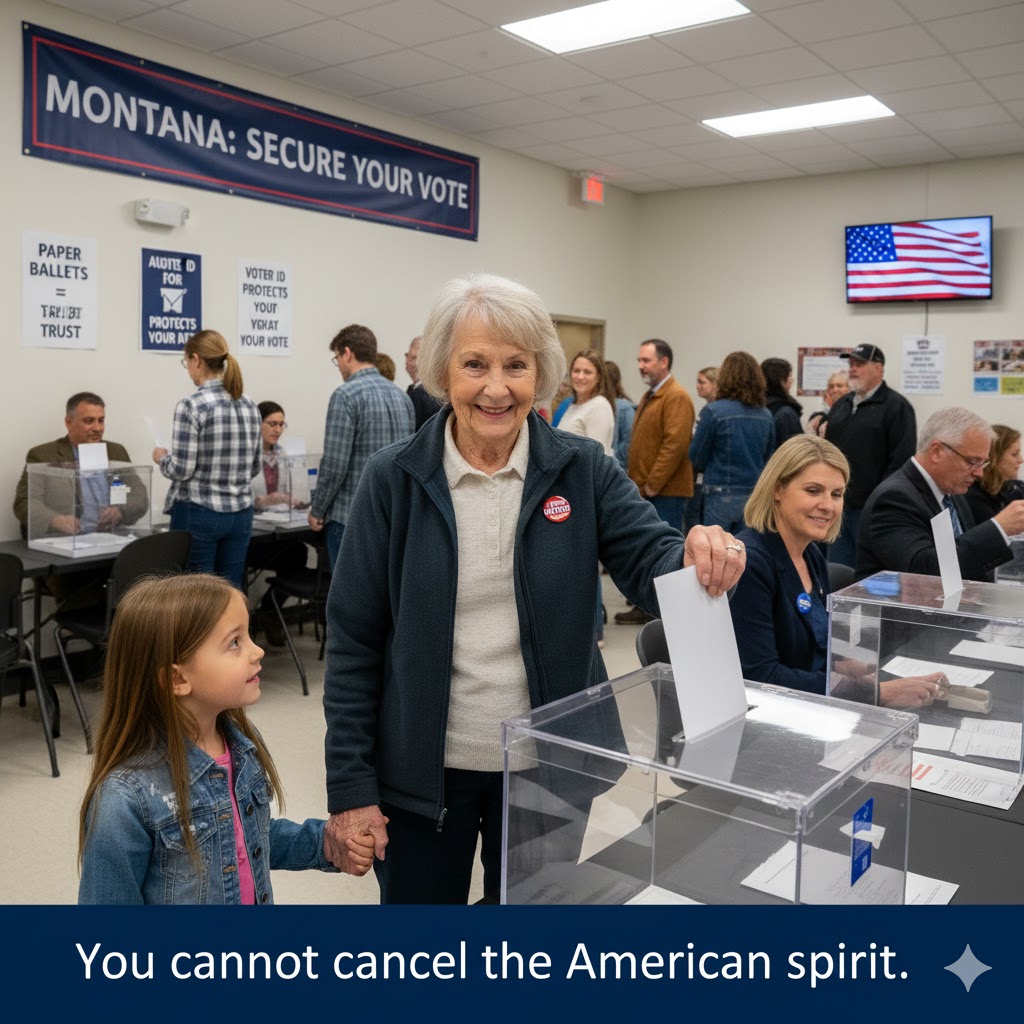
Enter the state of Montana. Led by a coalition of pragmatic lawmakers, they passed the “America First Election Security Act,” a landmark piece of legislation that was both revolutionary and deeply traditional. The act mandated paper ballots for every single vote, required randomised, public audits of all election results, and implemented nation-leading voter ID laws designed to prevent fraud while ensuring accessible voting for all eligible citizens. The cost was significant, the logistical challenge immense, and the political establishment in Washington immediately cried foul, predicting chaos and disenfranchisement.
A Landslide of Trust, a Global Silence
The results of the next election in Montana were undeniable. Voter turnout soared to record highs, a direct testament to renewed public confidence. The audits confirmed near-perfect accuracy, and the robust ID system, far from suppressing votes, helped local officials ensure only eligible citizens cast ballots. The loudest response, however, came from outside the state: the global media, often quick to criticise American democracy, were left with little to say. The partisan pundits who predicted disaster were proven spectacularly wrong. Montana’s quiet, determined act proved that strong, common-sense security measures can both protect the integrity of the vote and inspire unprecedented citizen participation. It was a patriotic victory for transparency, fairness, and the core American belief that every vote truly counts.